General surgeon in Satellite Town
Health Care Hospital is on Holy Family Road in Block F New Katarian, which means that for a great many people reading this, the surgeon is a walk or a rickshaw ride away. Gallbladder removal through a single 1 to 2 cm incision with no gas, plus the full range of general surgery, in your own neighbourhood.
Your own neighbourhood hospital
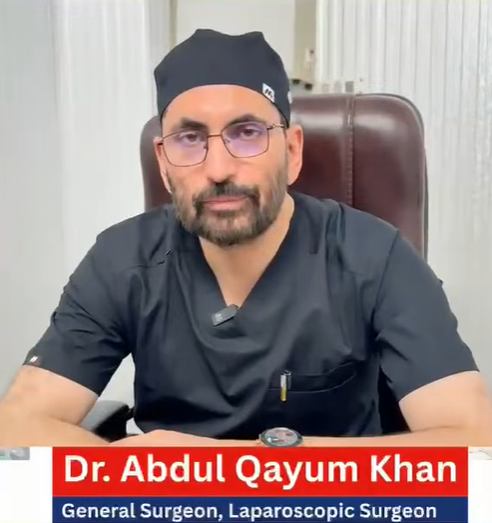
Satellite Town has been Dr. Khan's working base for a quarter of a century, and Health Care Hospital is his own facility rather than one he rents theatre time in. For local patients this produces something that is rare in surgery and easy to underestimate: continuity.
The surgeon who examines you in the OPD is the surgeon who operates on you. The anaesthetist and theatre staff are the same people every week rather than whoever is rostered. If you telephone at nine in the evening because a wound looks red, you reach a team who have your notes. If your father was operated on here six years ago, that operation note is in the same building.
That last point explains a good deal of the local caseload. A striking number of Satellite Town families have had several members treated here across the years, one after another, which is how surgical reputations are actually built in a neighbourhood like this. It has nothing to do with advertising.
Finding it
Where exactly the hospital is
Holy Family Road runs through Block F New Katarian, just off the Murree Road side of Satellite Town. If you know Chandni Chowk and Commercial Market you are already within a few minutes of it.
From Commercial Market, Chandni Chowk and the Blocks A through F it is a short walk or a very short rickshaw ride, and many local patients come to the OPD on foot. From Rehmanabad, Asghar Mall Road, Committee Chowk and the Liaquat Bagh side it is a matter of minutes along Murree Road. The Metro bus stations at Rehmanabad and Chandni Chowk are both close enough to walk from, which makes the consultation easy for anyone who would rather not deal with parking on Murree Road.
For the day of surgery you still need a private vehicle and somebody with you, even living five minutes away, because you cannot travel home unaccompanied after a general anaesthetic and you will be drowsy for several hours.
Being local
What proximity actually changes
Most of this website is written for patients travelling in from Peshawar, Jhelum or Azad Kashmir, where the logistics of a journey shape everything. For someone in Satellite Town the calculation is entirely different, and the advantages are concrete rather than sentimental.
You can be seen early, before the gallbladder gets difficult
The single biggest determinant of how easy your operation is turns out to be how long you waited. A gallbladder that has been repeatedly inflamed becomes thick walled, scarred and adherent to what surrounds it, which turns a 40 minute day case into a longer and more demanding operation with a higher chance of needing a larger incision. Patients who live five minutes from the hospital have no excuse for the months of antacids from the chemist, and every reason to walk in after the first attack.
Nothing needs compressing into one visit
For out of town patients there is constant pressure to fit consultation, tests and surgery into a single trip, and sometimes that is not safe. Locally, the sequence runs as it should. Consultation, then blood tests and any further imaging, then a decision, then a scheduled operation. Each step gets the attention it needs because the next visit costs you fifteen minutes.
Follow up in person rather than by photograph
Patients who have travelled often have their wound checked by WhatsApp photograph, which works perfectly well. Locally you come in and are looked at, which is better. The usual review is at about a week, to check the wound and discuss the histopathology report on the removed gallbladder, which is sent as routine on every specimen. Anything that worries you before then gets seen the same day rather than assessed down a phone line.
Emergencies are minutes away
This matters more than any of the above. Acute cholecystitis, a stone blocking the bile duct and gallstone pancreatitis all present suddenly and all need assessment the same day. Living beside the hospital means the difference between arriving early in that illness and arriving late, and in emergency abdominal surgery that gap is the whole game.
Come in, do not wait until morning
Severe constant pain under the right ribs, fever with shaking chills, yellowing of the eyes or skin, persistent vomiting, or a hard swollen abdomen. Telephone 0336 593 5765 or come to Health Care Hospital directly. You are five minutes away, which is an advantage worth using.
The operation
How the gallbladder is removed here
Most units in Rawalpindi take the gallbladder out through four separate incisions with carbon dioxide pumped into the abdomen to create working space. It is a sound operation. Its cost is that the gas presses on the underside of the diaphragm, and because the diaphragm shares its nerve supply with the shoulder, patients wake with referred pain in the right shoulder and chest that lasts days and has nothing to do with their wound.
The approach used here is one incision of 1 to 2 cm, no carbon dioxide at all, and no division of abdominal muscle. That removes the gas pain entirely, leaves one small wound rather than four, and because muscle is never cut the risk of a port site hernia developing later drops close to zero. For the many men in this area whose work involves lifting, that last point is not a cosmetic detail.
What it does not do is make the operation risk free, and it is not right for every gallbladder. A severely inflamed, gangrenous or densely scarred one may need converting to a larger incision, and being willing to do that is a mark of good surgery rather than a failure of it. The technique is explained in full here, and the complete patient guide including the risks is here.
Beyond gallbladder
The rest of the surgical work
The OPD covers general surgery in full, elective and emergency, and a good deal of the local caseload has nothing to do with gallstones.
- Hernia repair for inguinal, umbilical and incisional hernias with mesh reinforcement.
- Hysterectomy under spinal or general anaesthesia, with a female relative welcome throughout.
- Laparotomy and major abdominal surgery for bowel obstruction, perforation, trauma and abdominal malignancy.
- Urethral stricture repair for obstruction, straining and poor urinary flow.
- Circumcision including medically complex cases such as haemophilia and other bleeding disorders.
- Abscess drainage and minor procedures, from superficial collections to deep tissue, under local or general anaesthesia.
- High risk cases, including patients told elsewhere that surgery was too dangerous to attempt.
Second opinions are a routine part of the OPD and you do not need a referral to come for one. Bring whatever scan report and notes you were given.
Questions
From patients in Satellite Town
Can I just walk in to the OPD?
Yes. Walk in patients are seen alongside booked ones. Telephoning first means less waiting, and on a day with a long operating list it saves you arriving at the wrong time, but you will not be turned away for coming without an appointment.
I live a few minutes away. Can I walk home after the operation?
No, and this catches local patients out. After a general anaesthetic you will be unsteady and drowsy for hours, and you need somebody with you and a vehicle even for a five minute journey. Being close by makes everything easier except this one thing.
Do you have a relationship with the labs and pharmacies nearby?
You are free to have your tests done wherever you choose and to buy your medicines wherever you prefer. Bring the report and it will be used. Nobody here earns anything from sending you to a particular laboratory.
Several of my family have been treated here. Are the old records still available?
Yes, and it is worth mentioning at the consultation. A previous abdominal operation changes the surgical plan because of adhesions, and having the original operation note in the same building rather than described from memory is genuinely useful.
Can a female relative stay with me throughout?
Yes, and for women patients it is encouraged rather than merely allowed. A relative can accompany you in the OPD and wait with you before and after surgery. Mention it when booking and the visit will be arranged around it.
What does it cost?
It depends on the anaesthetic, theatre time, whether you need an overnight bed and what pre-operative testing your case requires, so a figure is given at consultation once the picture is clear. What is included and what changes the number is set out here. Raise affordability at the consultation rather than quietly delaying, because a gallbladder that becomes infected while you wait costs considerably more to treat.
You are minutes away. Come in after the first attack, not the fifth
Health Care Hospital, Holy Family Road, Block F New Katarian, Satellite Town. Walk in during clinic hours with your ultrasound report, or telephone first if you would rather not wait.