What the operation actually is
The gallbladder is a small pouch tucked under the right side of your liver. Its only job is to hold bile, which the liver makes continuously, and squeeze it into the intestine when a fatty meal arrives. It is a storage bag, not a factory. That single fact explains why removing it is such a well tolerated operation: the liver carries on making bile exactly as before, and the bile simply drains into the intestine in a steadier trickle instead of arriving in a squirt.
Removing the gallbladder is called a cholecystectomy. In Rawalpindi it is one of the commonest operations performed in general surgery, and at Health Care Hospital it is the procedure I do most often. The question that matters is almost never whether the operation can be done. It is whether you need it at all, and if you do, how much disruption it is going to cost you.
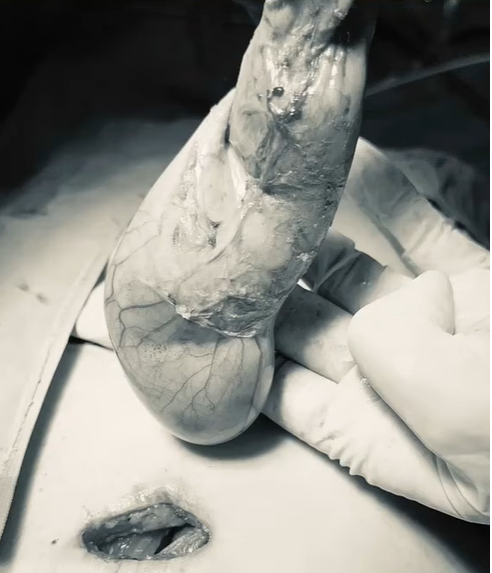
What follows is written for patients and their families rather than for doctors. If you have an ultrasound report in your hand and you are trying to work out what to do next, start with the section immediately below.
Do your gallstones actually need surgery?
This is where a good deal of unnecessary operating happens, and it deserves a straight answer. Stones that have never caused symptoms usually do not need to be removed. Large community studies have followed people with silent gallstones for years, and the majority never develop trouble. If your stones turned up incidentally on a scan done for something else, and you have never had the pain, you are often better observed than operated on.
Surgery becomes the right answer when the gallbladder has started causing problems, or when the risk of it causing a serious problem is high enough that waiting is the more dangerous choice. In practice that means the following situations.
Biliary colic, the classic attack
A stone temporarily blocks the gallbladder outlet and the organ contracts hard against the obstruction. The result is a severe, steady pain under the right ribs or in the upper middle of the abdomen, often spreading to the back or the tip of the right shoulder blade. It typically comes on within an hour or two of a rich meal, builds over several minutes, sits at a plateau for anywhere from half an hour to a few hours, and then fades. Many patients describe sweating, restlessness and vomiting with it. Once these attacks have started they tend to recur, and each one carries a risk of turning into something worse. This is the commonest and most straightforward reason to operate.
Acute cholecystitis
Here the blockage does not release. The trapped gallbladder becomes inflamed and then infected. The pain stops coming and going and instead stays, fever appears, and pressing under the right ribs becomes intensely tender. This needs hospital assessment the same day. It is treated with antibiotics and fluids, and surgery, either during that admission or after the attack has settled depending on how long the symptoms have been present and how the gallbladder looks on scanning.
Stones that have escaped into the bile duct
A small stone can slip out of the gallbladder into the common bile duct, the pipe carrying bile from the liver to the intestine. When that duct blocks, the whites of the eyes and then the skin turn yellow, the urine darkens, the stools go pale, and itching often follows. This is more serious and is managed in two parts: the duct is cleared, usually endoscopically through ERCP, and the gallbladder is then removed so it cannot send another stone down the same path.
Gallstone pancreatitis
A stone passing through the duct can inflame the pancreas, producing severe upper abdominal pain boring through to the back, with vomiting. This is a medical emergency. Once the attack has settled, the gallbladder should be removed, ideally during the same hospital stay, because the chance of a second and possibly worse attack while waiting is significant.
Polyps and a thickened or calcified wall
Gallbladder polyps of 10 mm or more, polyps that are growing on repeat scans, and a gallbladder whose wall has become calcified all carry a raised risk of malignancy, and removal is advised even without symptoms. Smaller polyps are usually watched with periodic ultrasound.
When I advise against operating
If your scan shows stones but your symptoms are burning behind the breastbone, bloating after every meal regardless of fat content, or pain that lasts all day every day, the gallbladder may not be the culprit at all. Acid reflux, gastritis and irritable bowel disease all coexist happily with silent stones, and removing the gallbladder will not fix them. In that situation I would rather investigate properly than book you for an operation that leaves you with the same complaint and one fewer organ.
Can gallstones be dissolved or passed instead?
Patients ask this constantly, and it is a fair question. The honest answer is that medical dissolution works poorly and rarely. Bile acid tablets such as ursodeoxycholic acid can dissolve small, purely cholesterol stones in a gallbladder that still empties well, but treatment runs for months to years, it succeeds in a minority of carefully chosen patients, and stones return in a large proportion once the tablets stop. Shock wave lithotripsy, which works well for kidney stones, has largely been abandoned for the gallbladder for the same reason: the stones come back because the gallbladder that made them is still there.
Herbal flushes, olive oil and lemon regimens, and the soft green pellets they produce in the stool are not dissolved stones. They are saponified oil. I mention this only because patients arrive having delayed treatment for months on the strength of them, sometimes presenting eventually with an infected gallbladder that would have been a simple day case earlier.
Diet control is genuinely useful, but it is a way of reducing how often you get attacks, not a cure. Avoiding fried food, ghee-heavy curries, cream and red meat will make attacks less frequent. It will not remove the stone.
The operation here
How the gallbladder is removed at this practice
There are three recognised ways to take out a gallbladder, and the difference between them is mostly a difference in how much of your abdominal wall has to be disturbed to reach it.
Open surgery uses a single long incision below the right ribs. It is still the correct choice in certain circumstances, particularly when the anatomy is dangerously obscured, but it means a significant wound, several days in hospital and weeks of recovery.
Standard laparoscopic surgery uses four small incisions and inflates the abdominal cavity with carbon dioxide to create working space. It is a large improvement on open surgery and is what most units offer. Its drawback is the gas: the pressure irritates the diaphragm, and because the diaphragm shares nerve supply with the shoulder, patients wake with referred pain in the right shoulder and chest that can last several days and is often the thing they remember most about the whole experience.
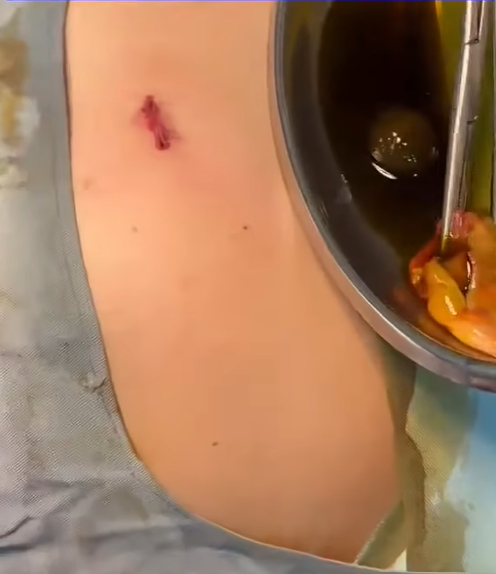
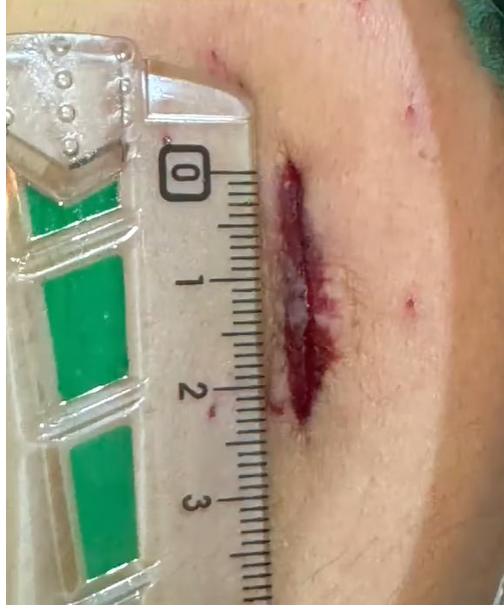
The approach I use is a single incision of 1 to 2 cm without carbon dioxide insufflation. Working through one opening, without dividing muscle, and without inflating the abdomen removes the two things that generate most of the discomfort afterwards. There is one small wound rather than four, no trapped gas to cause shoulder pain, and because muscle is not cut, the risk of a port site hernia later on is very low. I have been performing and refining this technique over 25 years of practice. The technique page explains it in full.
| Anaesthesia | General anaesthesia, with a full pre-operative fitness assessment |
| Time in theatre | Usually 30 to 60 minutes, longer if the gallbladder is badly inflamed or scarred |
| Incision | One opening of 1 to 2 cm, no muscle divided |
| Carbon dioxide gas | Not used |
| Hospital stay | Same day discharge in most cases |
| Back to desk work | Typically 3 to 5 days |
| Back to heavy lifting | 2 to 3 weeks |
| Where | Health Care Hospital, Holy Family Road, Block F New Katarian, Satellite Town, Rawalpindi |
Preparing for surgery
Most of what determines whether you go home the same evening is decided before you ever reach the operating table. The preparation is not complicated, but each part of it exists for a reason.
The consultation
Bring your ultrasound report and films, any previous scans, a list of every medicine you take including anything bought over the counter, and details of any operation you have had before. I will examine you and go through your symptoms in detail, because the pattern of the pain tells me more about whether the gallbladder is the problem than the scan does.
Tests before the operation
A blood count, liver function tests, kidney function, blood sugar, clotting profile and hepatitis B and C screening are standard. An ECG and a chest film are added for older patients or anyone with a cardiac history. If the liver tests are abnormal or the bile duct looks wide on ultrasound, further imaging such as MRCP is arranged first, because a stone sitting in the duct changes the plan entirely.
Medicines to adjust
Blood thinners including aspirin, clopidogrel and warfarin need planning, and the timing depends on why you are taking them, so never stop them on your own. Diabetic medication, particularly metformin and insulin, is adjusted around the fasting period. Blood pressure tablets are usually continued with a sip of water. Bring the boxes rather than trying to remember the names.
Fasting
Nothing to eat for six hours before surgery and no clear fluids for two hours. This is an anaesthetic safety requirement, not a formality. Patients who eat breakfast on the morning of an afternoon list get postponed, which is a wasted day for everyone.
Arranging your discharge in advance
Because you will be leaving the same day, plan for it before you arrive. You cannot drive yourself home after a general anaesthetic, so arrange transport. A responsible adult should stay with you for the first night. If you live more than two or three hours away, in Chakwal or Jhelum or Mardan, tell me at the consultation and we will either schedule you early on the list or arrange an overnight stay rather than have you travel late in the evening. This is worth reading alongside the information for travelling patients.
Afterwards
What recovery honestly feels like
I would rather you have an accurate expectation than a flattering one, because patients who know what is coming cope with it far better than patients who were told it would be nothing.
The first few hours
You will wake in the recovery area. Expect a sore throat from the breathing tube, some grogginess, and a feeling around the wound best described as bruised rather than sharp. Because no gas is used, you should not get the shoulder and chest pain that patients describe after conventional laparoscopy, and in my experience that single difference accounts for most of the gap in how comfortable the first day is. Simple painkillers usually control the wound soreness. Nausea settles with medication if it appears. Once you are fully awake, passing urine, drinking without vomiting and walking to the bathroom unaided, you are ready to go home.
The first week
Day one and two are the sorest, and the discomfort is mostly felt on standing up, coughing, laughing or turning over in bed. Hold a pillow against the abdomen when you cough and it helps considerably. Walk short distances around the house from the first evening, because early movement reduces the risk of clots and chest problems. Sleep is often better propped up on an extra pillow for the first two or three nights. By day three or four most patients are noticeably more comfortable, and by the end of the first week the wound is usually just a mild tenderness.
Eating afterwards
Start with light food on the first evening: soup, yoghurt, rice, bread, boiled vegetables, tea. Over the following week reintroduce your normal diet gradually, leaving heavily fried food, ghee, cream and rich meat dishes until last. Some patients find that a large fatty meal in the first month gives them loose stools or urgency. This settles for the great majority within a few weeks as the bile duct adapts, and is discussed further below.
Wound care, stitches and washing
Keep the dressing dry for the first 48 hours. After that you may shower, patting the area dry rather than rubbing. Do not soak in a bath or swim until the wound is fully sealed. Absorbable sutures do not need removal. Any redness spreading outward from the wound, increasing rather than decreasing pain, discharge, or fever should be reported the same day rather than left until the review appointment.
Getting back to normal life
Office and desk work is usually realistic after three to five days. Driving can resume once you can perform an emergency stop without hesitating because of the wound, which is normally about a week. Manual labour, gym work, lifting children and carrying heavy shopping should wait two to three weeks. Patients whose work involves lifting weight all day, and that includes a great many people in this city, should plan for the full three weeks rather than trying to prove something in the second.
The follow up appointment
I review patients at around one week to check the wound and discuss the histopathology report on the removed gallbladder, which is sent routinely. A second review follows if anything needs watching. Patients who have travelled a long distance can send wound photographs on WhatsApp and be reviewed remotely where appropriate, so that a four hour round trip is not required simply to look at a healing incision.
The risks, stated plainly
Cholecystectomy is a safe operation, but it is still an operation, and no surgeon who tells you otherwise is being straight with you. These are the complications that genuinely occur, roughly in order of how often I see them.
Wound infection
The commonest problem and usually a minor one. The wound becomes red, tender and sometimes discharges. It is treated with antibiotics and dressings, and occasionally by opening a small part of the wound to drain it. A smaller wound means less of it to become infected, which is one practical advantage of the single incision approach.
Bleeding
Minor oozing is expected and stops. Significant bleeding requiring transfusion or a return to theatre is rare, and the risk is higher in patients on blood thinners or with liver disease, which is exactly why the clotting screen and the medication review before surgery matter.
Bile leak
A small amount of bile can leak from the gallbladder bed or the clipped duct stump afterwards, causing persistent pain, distension and feeling unwell over the following days. Most settle with drainage, sometimes assisted by an endoscopic procedure to lower the pressure in the duct.
Injury to the common bile duct
The most serious complication of this operation anywhere in the world. The bile duct sits immediately next to the structures being divided, and if the anatomy is distorted by severe inflammation it can be mistaken for the cystic duct. It is uncommon, and it is avoided by careful dissection, by proving the anatomy before dividing anything, and above all by being willing to convert to an open operation rather than press on through a view the surgeon cannot be certain of.
Conversion to open surgery
Not a complication so much as a judgement. Dense adhesions from previous surgery, a severely inflamed or gangrenous gallbladder, or bleeding that cannot be controlled through a small opening may all mean the safest route is a larger incision. It changes the recovery, but choosing safety over a smaller scar is always the correct decision and I will tell you before surgery if I think it is likely in your case.
Retained stone in the bile duct
A stone already sitting in the duct at the time of surgery can declare itself afterwards with jaundice or pain. It is dealt with endoscopically. Pre-operative liver tests and imaging are what keep this rare.
Loose stools after fatty meals
Because bile now drips continuously rather than being released in a bolus, some patients get urgency or looser stools after rich food. It usually improves within weeks to a few months, responds to eating smaller and less fatty meals, and in persistent cases responds well to bile acid binding medication.
Continuing pain afterwards
A minority of patients still have upper abdominal symptoms after the gallbladder is gone. Sometimes a duct stone or a bile leak explains it, but frequently it means the original pain was never biliary in the first place, and the cause is reflux, gastritis or a functional bowel disorder. This is precisely why the assessment before surgery matters as much as the surgery.
Signs that need attention rather than waiting
Fever with shaking chills, yellowing of the eyes or skin, pain that gets worse each day instead of better, persistent vomiting, a swollen hard abdomen, or breathlessness. Any of these after your operation means you should telephone the clinic straight away on 0336 593 5765 rather than wait for the review appointment.
Living without a gallbladder
The most frequent worry patients bring to the consultation is whether they will be permanently restricted afterwards. They will not. Bile production is a liver function and it continues unchanged. What you lose is a reservoir, not a manufacturing plant.
In practice this means the first few weeks call for a little care and the rest of your life does not. Eat smaller meals more often to begin with. Keep fried and ghee-rich food modest for the first month. Then, for the overwhelming majority of patients, normal eating resumes entirely, including the food you actually want to eat at weddings and on Eid. There is no lifelong diet sheet, no permanent medication, and no supplement you are obliged to take.
A small number of people remain sensitive to very fatty meals in the long term and simply learn where their own limit is. That is a manageable adjustment, and it needs to be weighed against what the alternative looks like: repeated attacks of biliary colic, and a standing risk of an emergency admission with an infected gallbladder or pancreatitis at a time you did not choose.
پتہ نکالنے کے بعد جگر بائل بنانا بند نہیں کرتا۔ شروع کے چند ہفتے ہلکی غذا لیں، تلی ہوئی چیزوں سے پرہیز کریں، اور اس کے بعد زیادہ تر مریض معمول کی خوراک پر واپس آ جاتے ہیں۔
Cases that need more than a routine list slot
Not every gallbladder is a straightforward one, and some patients are told elsewhere that their surgery is too risky to attempt. A significant part of my practice is exactly these cases.
Badly diseased gallbladders
Empyema, gangrene, a contracted and scarred gallbladder, or a wall so thickened that the normal planes are lost. These take longer, demand a lower threshold for converting, and should not be booked as a routine day case.
Higher risk patients
Elderly patients, poorly controlled diabetes, cardiac and respiratory disease, obesity, and patients on long term anticoagulation. Each needs the anaesthetic plan and the discharge plan built around them rather than the other way round.
Haemophilia and clotting disorders
Surgery is possible with proper haematological planning and factor cover arranged around the operation. I have operated on patients with haemophilia across several procedures, and the planning matters more than the cutting.
If you have been refused surgery elsewhere or told your case is too complicated, the page on complicated and high risk gallbladder surgery covers how these cases are assessed and planned.
Questions patients ask
Before you book
Is gallbladder removal considered major surgery?
It is performed under general anaesthesia and it involves entering the abdominal cavity, so it is not a minor procedure in the technical sense. In terms of what it means for you, however, a single incision cholecystectomy in a fit patient is a day case: you arrive in the morning, you go home in the evening, and you are back at a desk within the week. The word major describes the anaesthetic and the anatomy, not the disruption to your life.
How long does the operation itself take?
Usually between 30 and 60 minutes of operating time. Add time either side for anaesthesia and recovery, so plan for most of the day in hospital even though the surgery is short. A gallbladder that is acutely inflamed, scarred from previous attacks, or surrounded by adhesions from earlier surgery will take longer, and I would rather spend the extra time than rush a dissection near the bile duct.
Will it hurt afterwards?
There will be some soreness at the wound, mostly noticeable when you stand, cough or turn in bed, and it is at its worst on the first two days. What you should not get with this technique is the shoulder and chest pain caused by carbon dioxide, because no gas is used. Simple painkillers are enough for most patients. Anyone promising you a completely painless operation is overselling it.
Can I really go home the same day?
Most patients do. The criteria are simple: you are fully awake, your pain is controlled with tablets, you can drink without vomiting, you have passed urine and you can walk unaided. Patients who are elderly, who have significant heart or lung disease, whose gallbladder proved badly inflamed, or who live several hours away are better kept overnight, and that decision is made on the day rather than assumed in advance.
What happens if I just leave the stones alone?
If they have never caused symptoms, quite possibly nothing, and observation is reasonable. Once attacks have begun the picture changes, because each further episode carries a chance of progressing to an infected gallbladder, a stone lodged in the bile duct, or pancreatitis. Those are emergency presentations, they carry higher risk than planned surgery, and they arrive at inconvenient times. Choosing the date yourself is safer than having it chosen for you.
Can the stones come back after surgery?
Not in the gallbladder, because the gallbladder is gone. Very occasionally a stone forms within the bile ducts themselves years later, which is uncommon and treatable. The recurrent attacks that brought you to surgery do not come back.
Is the operation safe at 70 or 80 years of age?
Age alone is not a barrier. What matters is heart, lung and kidney function, diabetic control and general fitness, which is what the pre-operative assessment measures. In older patients an emergency admission with an infected gallbladder is considerably more dangerous than a planned operation, so age is often an argument for treating sooner rather than for avoiding treatment.
Can this be done during pregnancy?
It can when it is necessary, most safely during the second trimester, and it is sometimes the right decision because repeated attacks or pancreatitis carry their own risk to the pregnancy. It requires joint planning with the obstetric team and is not undertaken lightly. Mild symptoms are usually managed conservatively until after delivery.
Will there be a visible scar?
There is one incision of 1 to 2 cm. It heals to a fine line that becomes progressively harder to find, and many patients need to look carefully to locate it after some months. Healing varies between individuals, and anyone who has a history of keloid or thickened scars should mention it at the consultation.
What does it cost?
The total depends on the anaesthetic, the theatre time, whether an overnight stay is needed and what pre-operative testing your case requires, so a figure is given at consultation once your situation is clear. The cost page sets out what is included and what changes the number.
Do I need to be referred by another doctor?
No. Patients book directly by telephone or WhatsApp. GP and specialist referrals are equally welcome and are given same week OPD slots where possible, which is covered on the page for referring doctors.
About the author